KS-250388
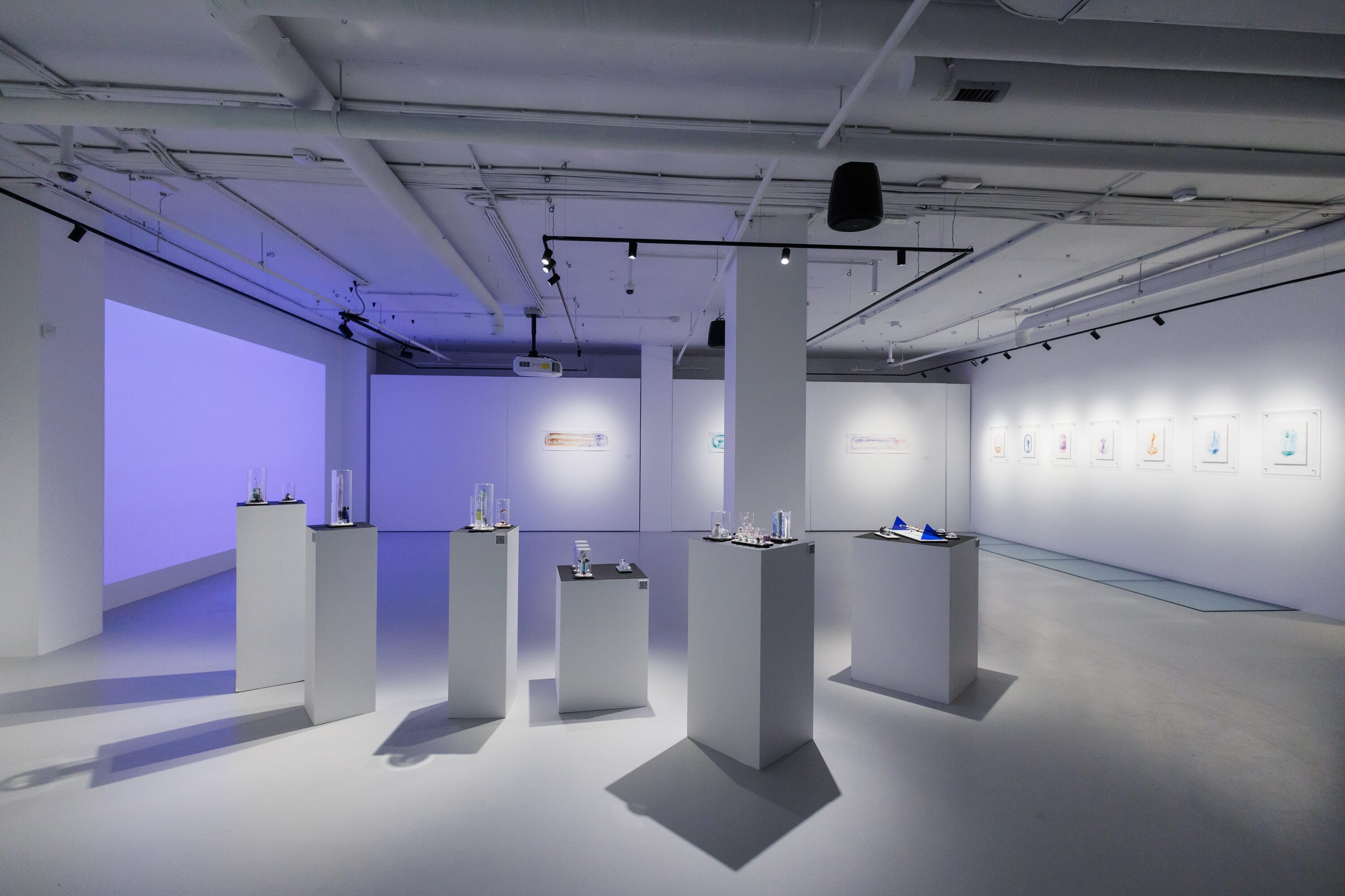
The Ruarts Foundation presents Alyona Kalyanova’s solo exhibition ‘KS-250388’, an imaginary space expedition launched in 2024. This project is built at the intersection of science fiction and the philosophy of inner experience. The starting point was Carl Sagan’s novel ‘Contact’, where the line between interstellar flight and a journey into the depths of consciousness blurs. The dual perspective – the cosmos as the space outside us and the cosmos as the space within us – becomes the structure of the entire project.
The title ‘KS-250388’ is not simply a symbol for a distant cosmic sector; it is the artist’s encrypted personal code, connecting the coordinates of the universe with her date of birth. Her biography becomes a star map. Unlike most science fiction narratives, which tend toward dystopia, ‘KS-250388’ is a futuristic utopia game with elements of self-irony.
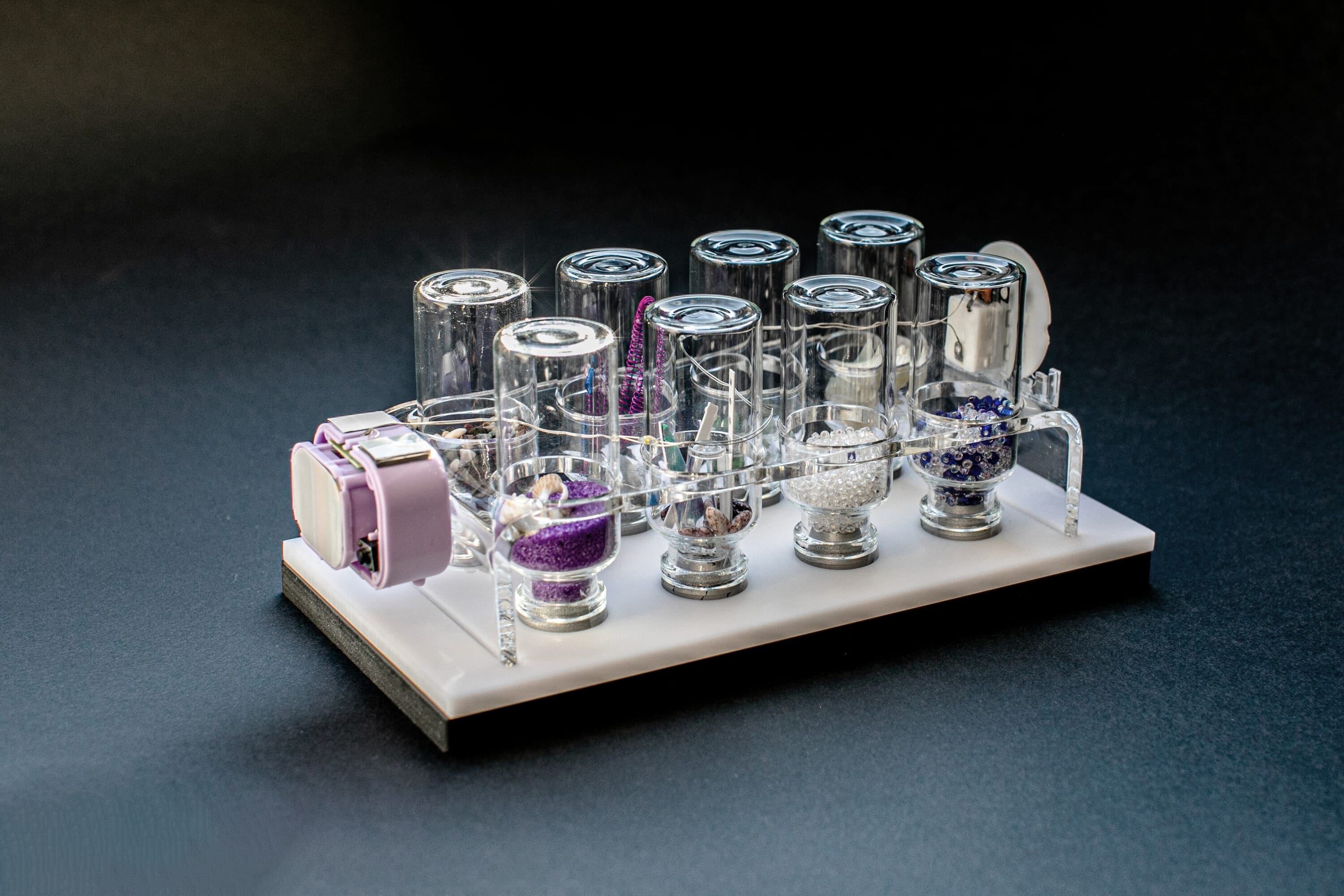
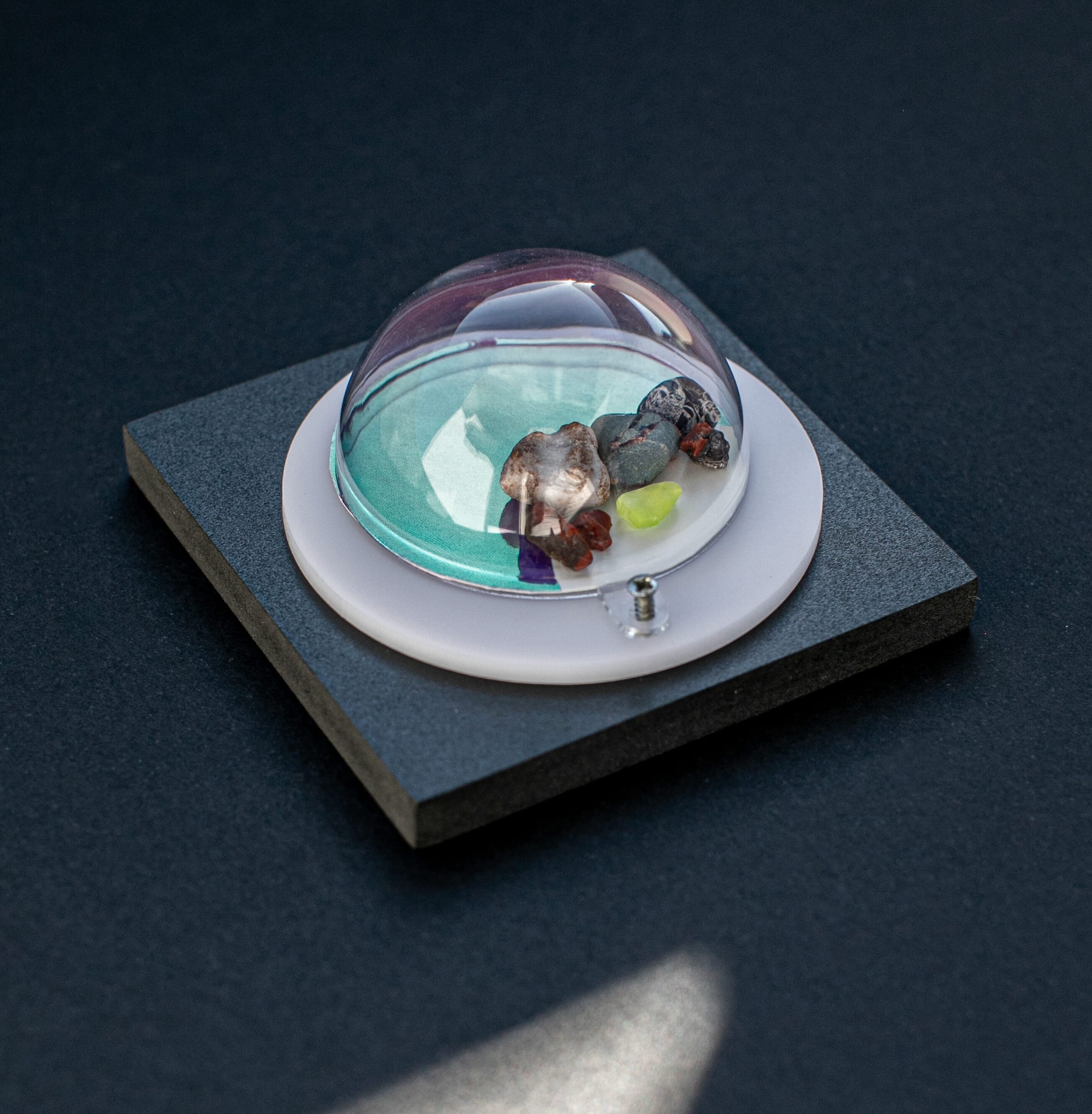
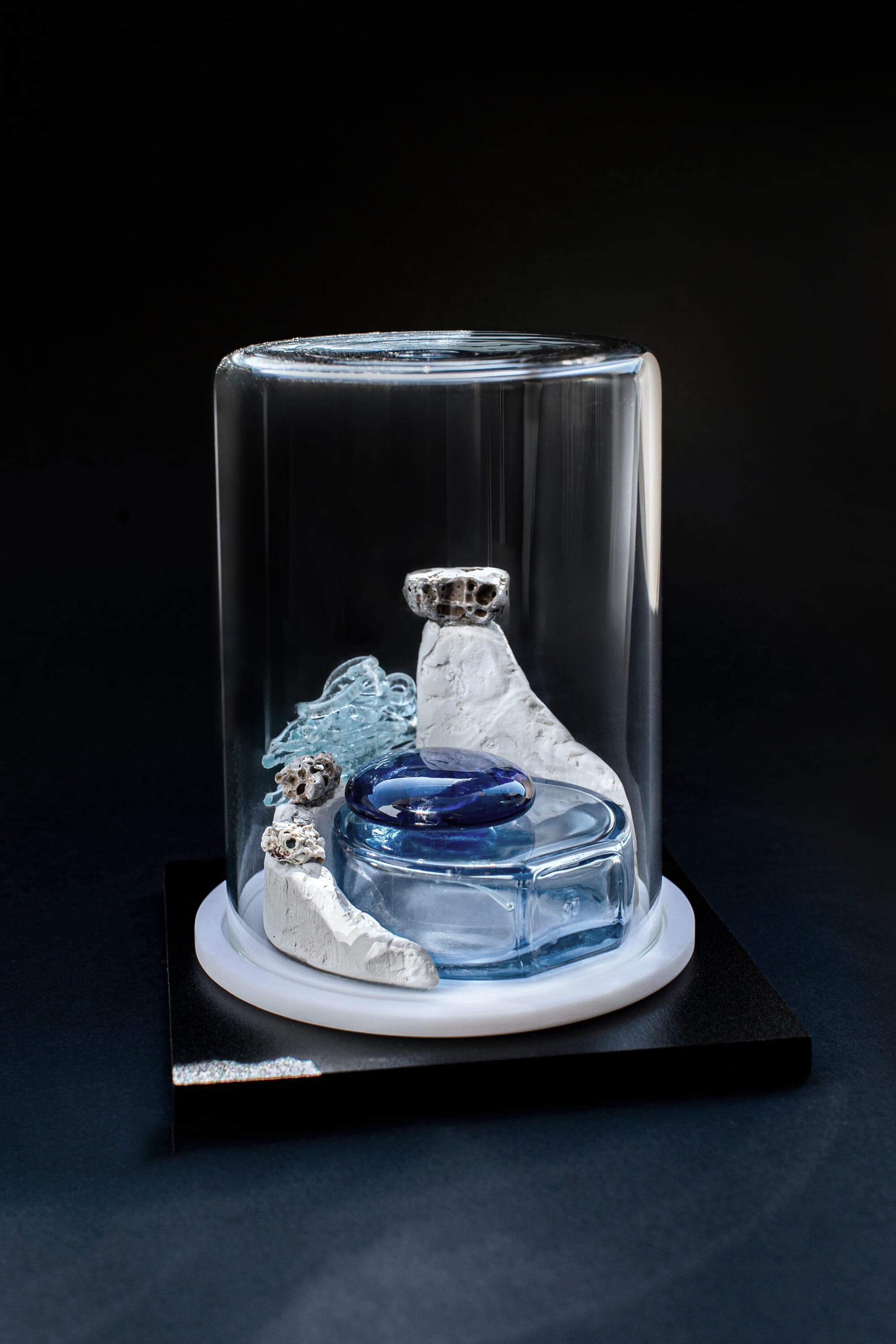
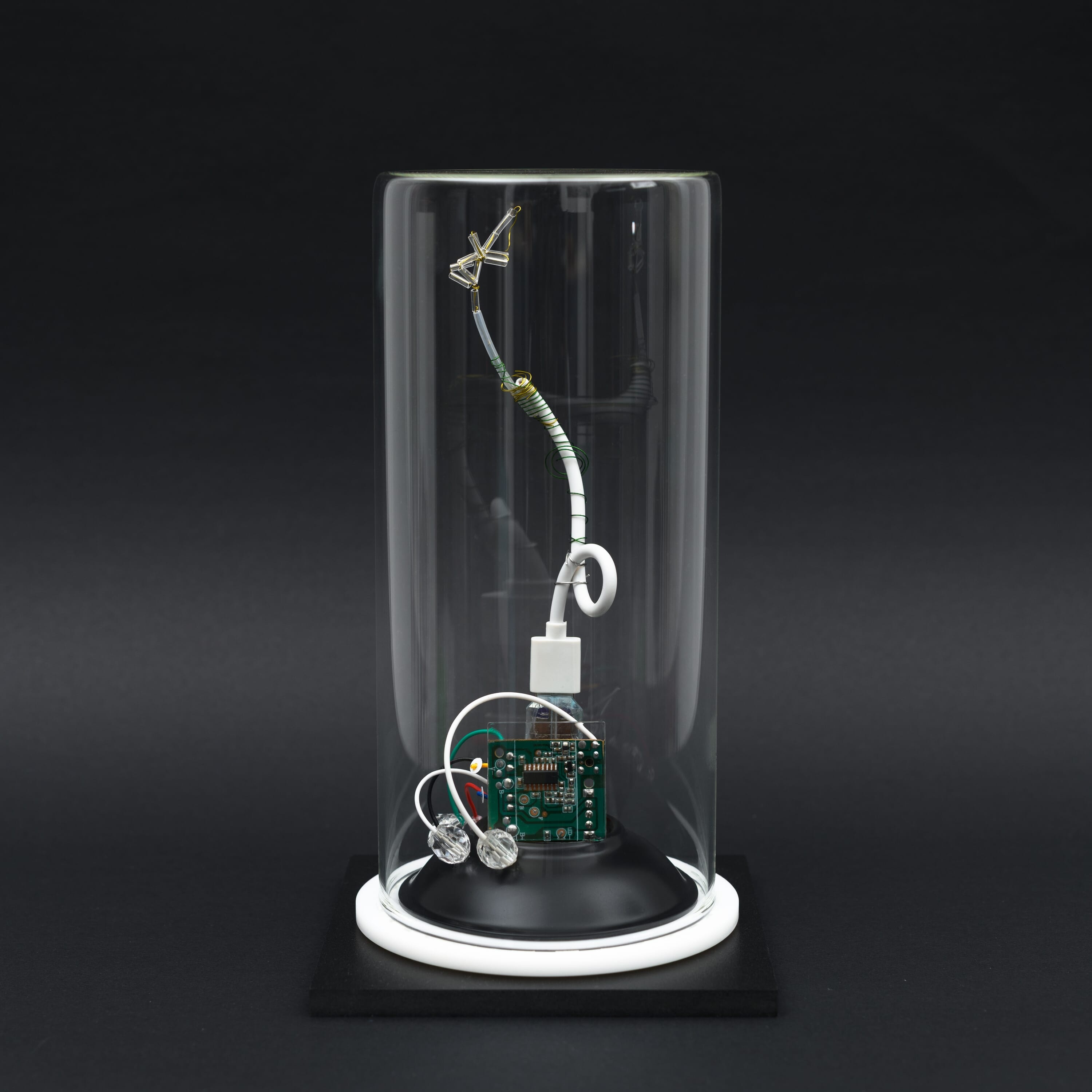
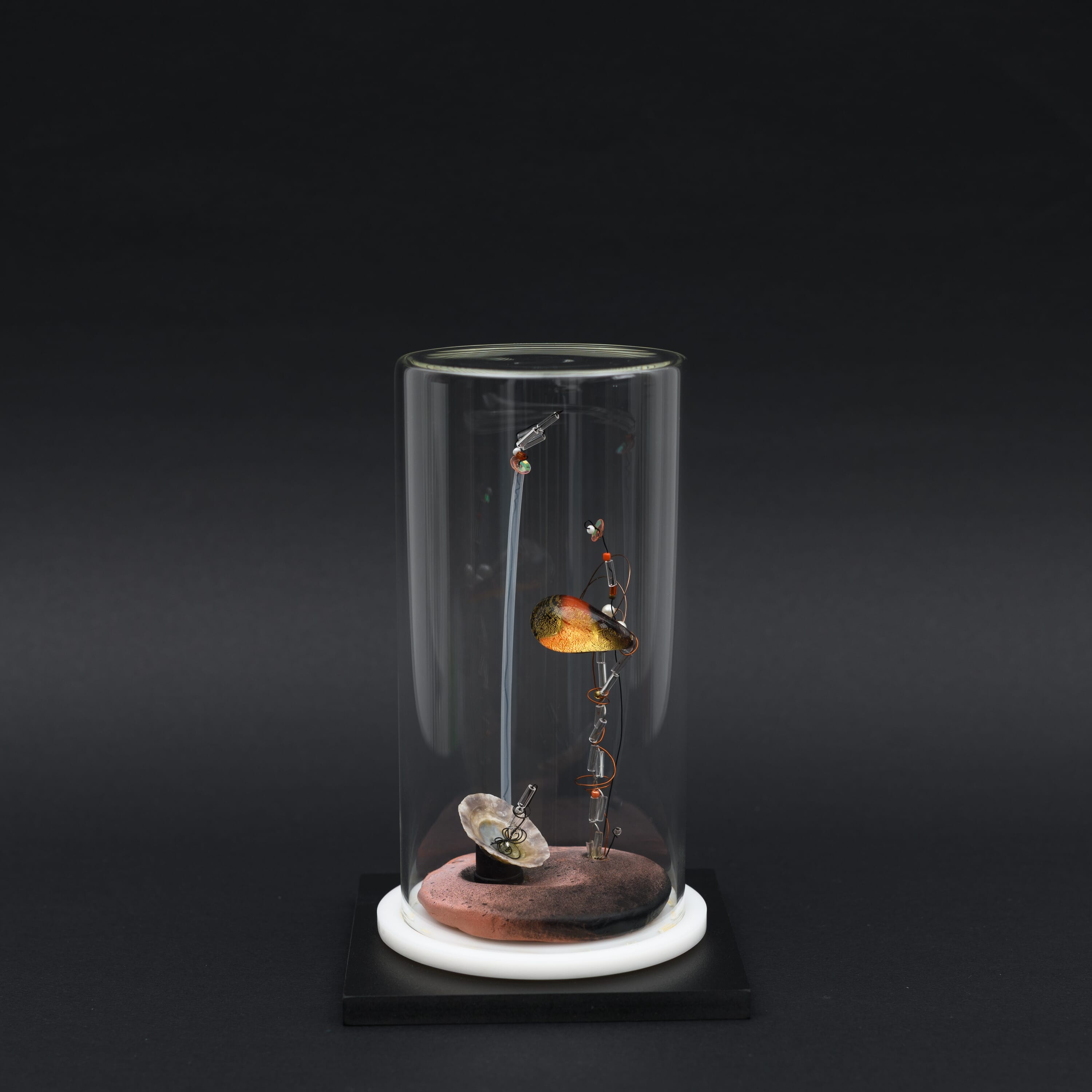
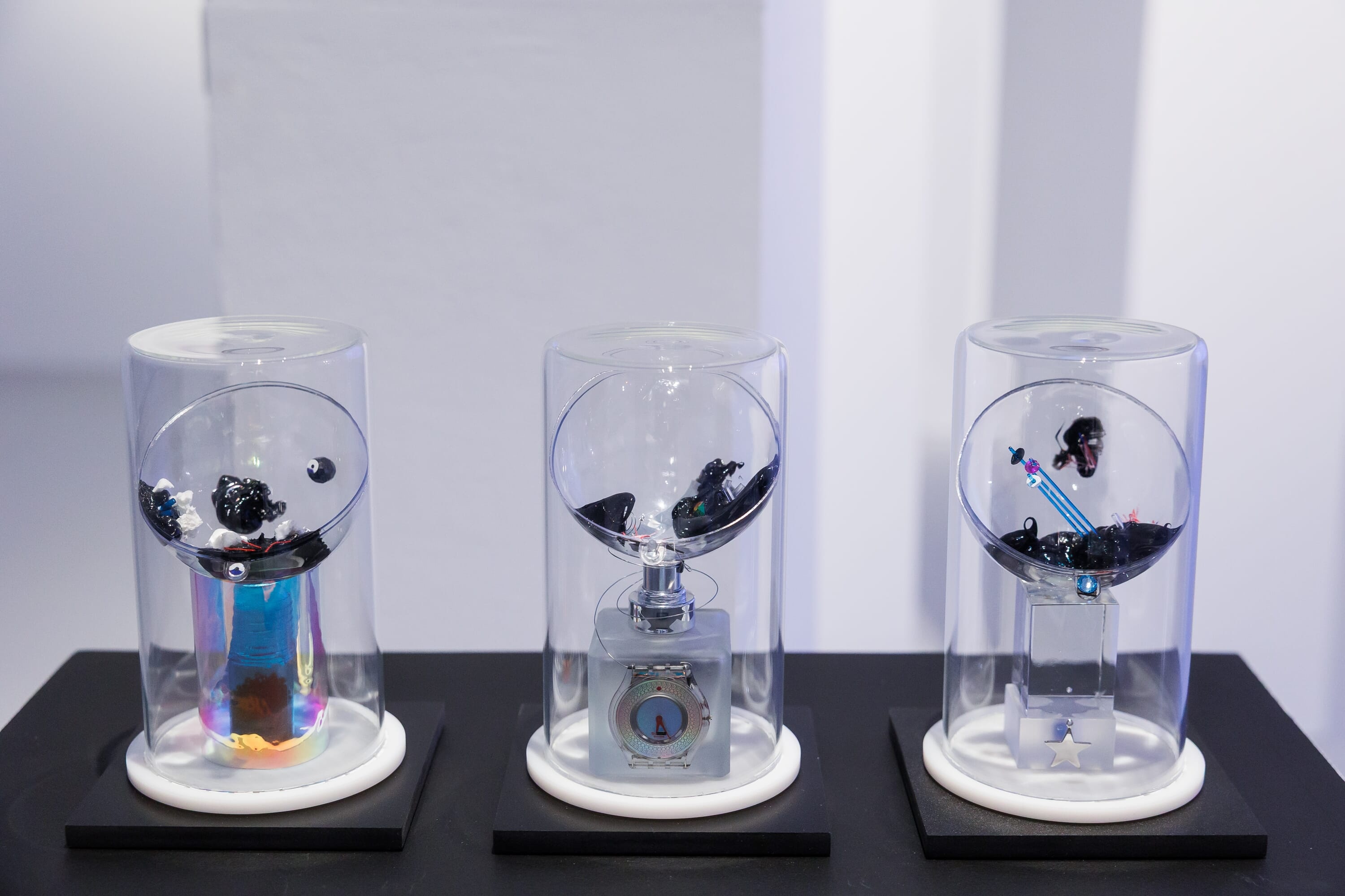
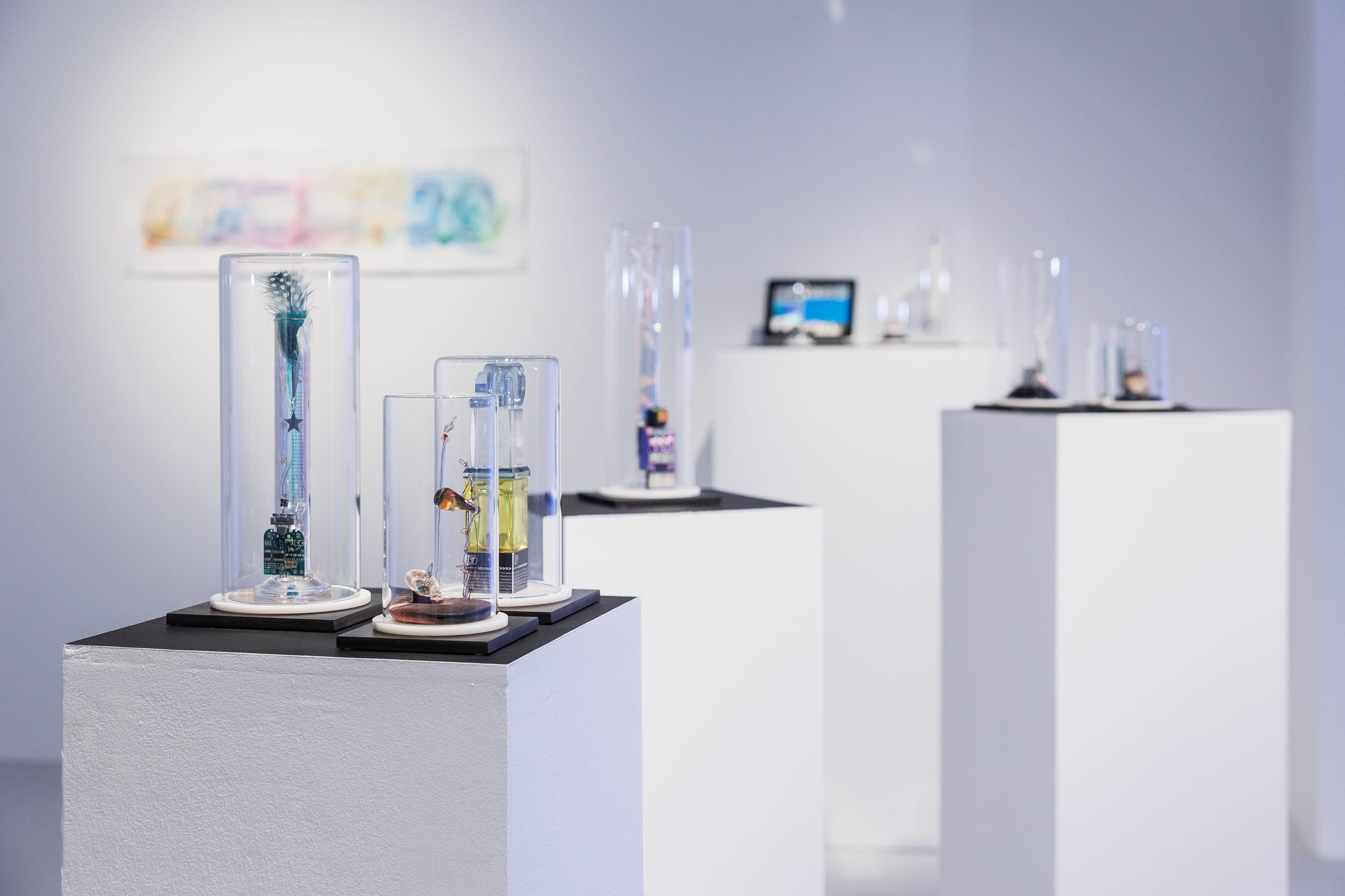
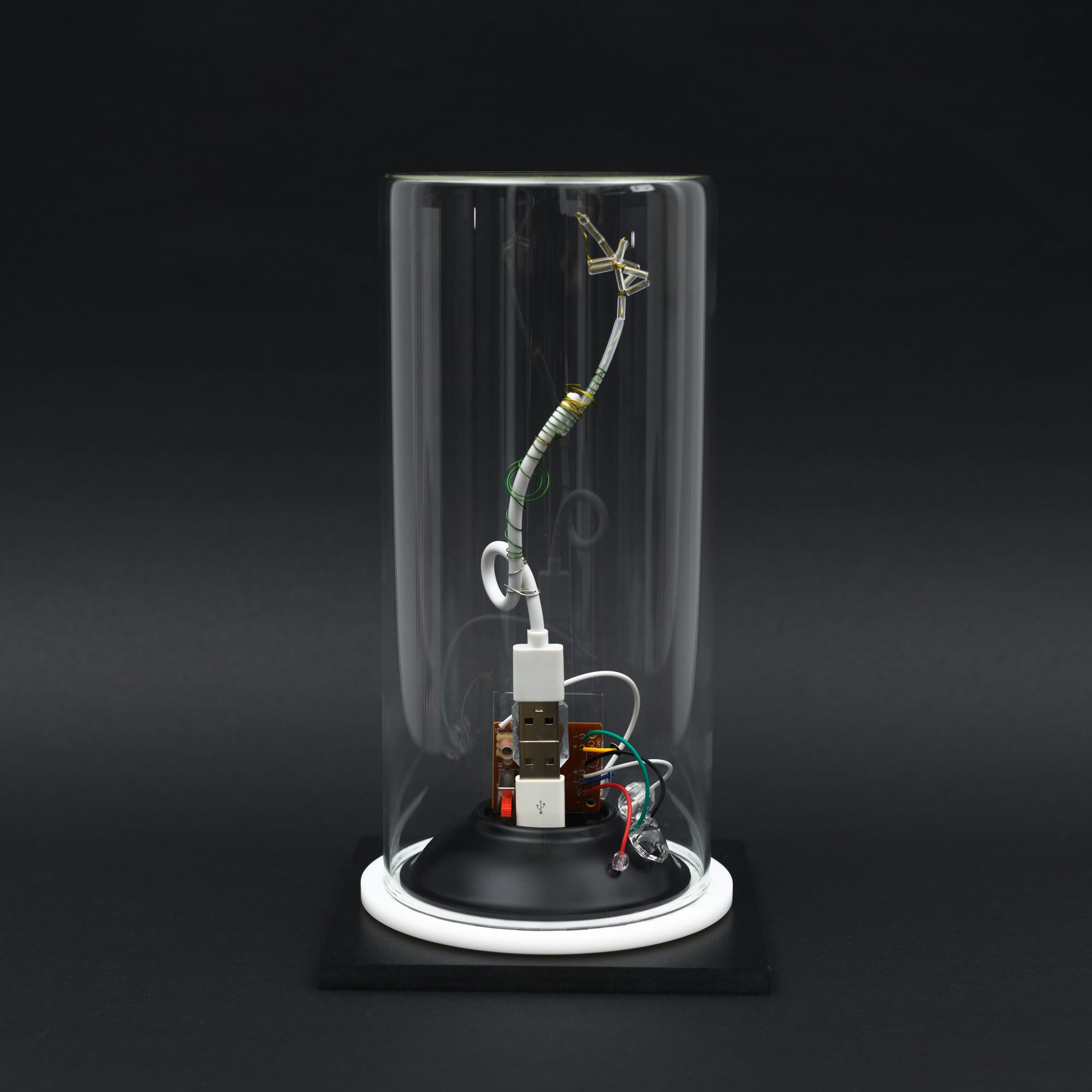
From her imaginary expedition the artist ‘brings back’ artefacts: samples of alien flora, fragments of biomes and models of devices from highly developed civilisations. Sculptures made of glass and found objects resemble museum exhibits or laboratory samples. “These objects are symbols of superpowers that people have long dreamed of, such as a time machine, a hyperspace generator, a teleporter, an antenna for insight, a biocreator, and others,” the artist says. They are not so much devices as metaphors for the eternal human desire to transcend physical limitations.
Here cosmonautics becomes psychonautics – the exploration and exploration of inner spaces – memory, empathy and collective imagination. By creating these ‘miracle devices’, the artist poses a fundamental question: if a human upgrade through technological intervention is inevitable, then what could be a positive, ethically sound scenario for fusion of the human and artificial?
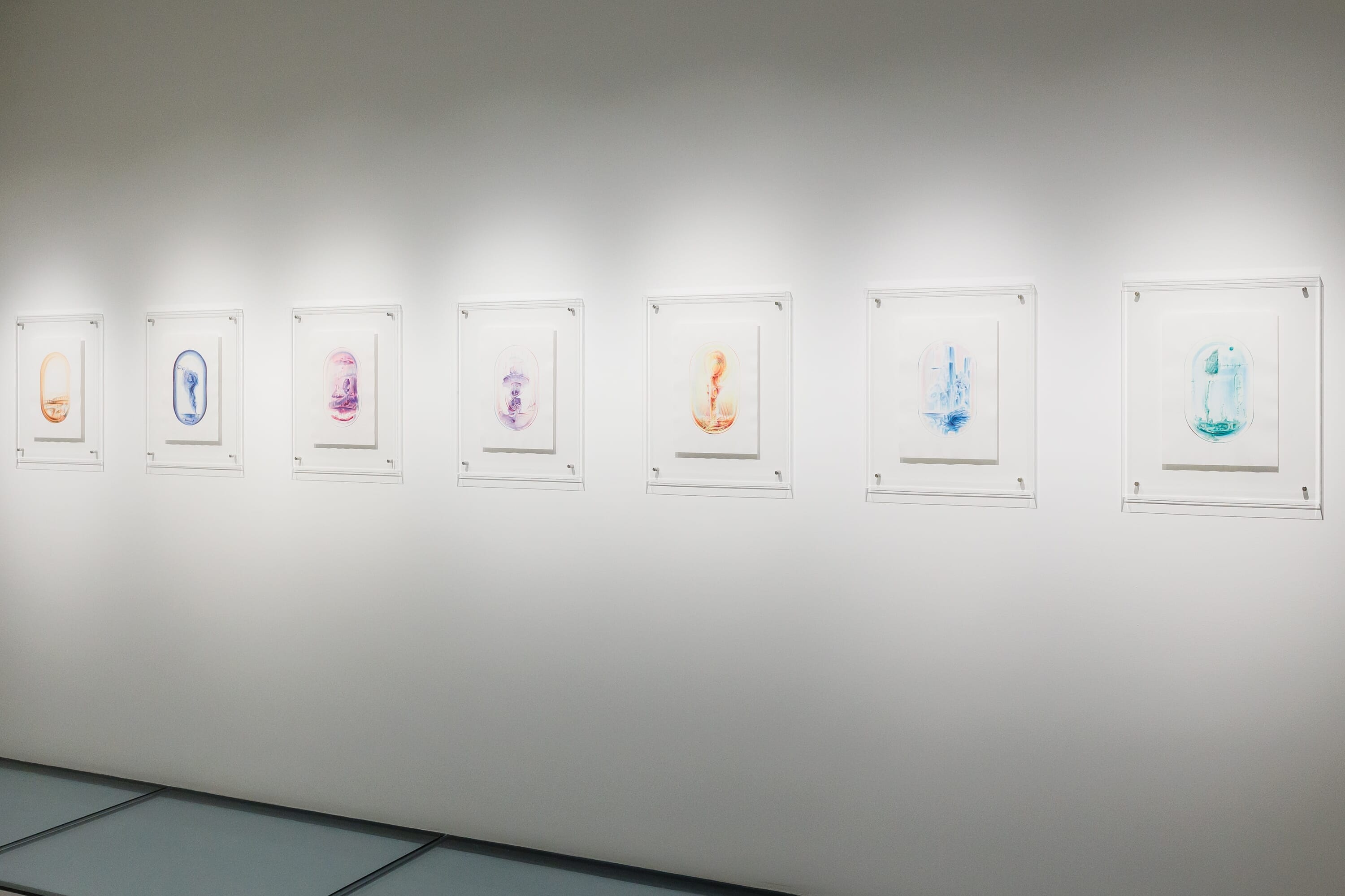
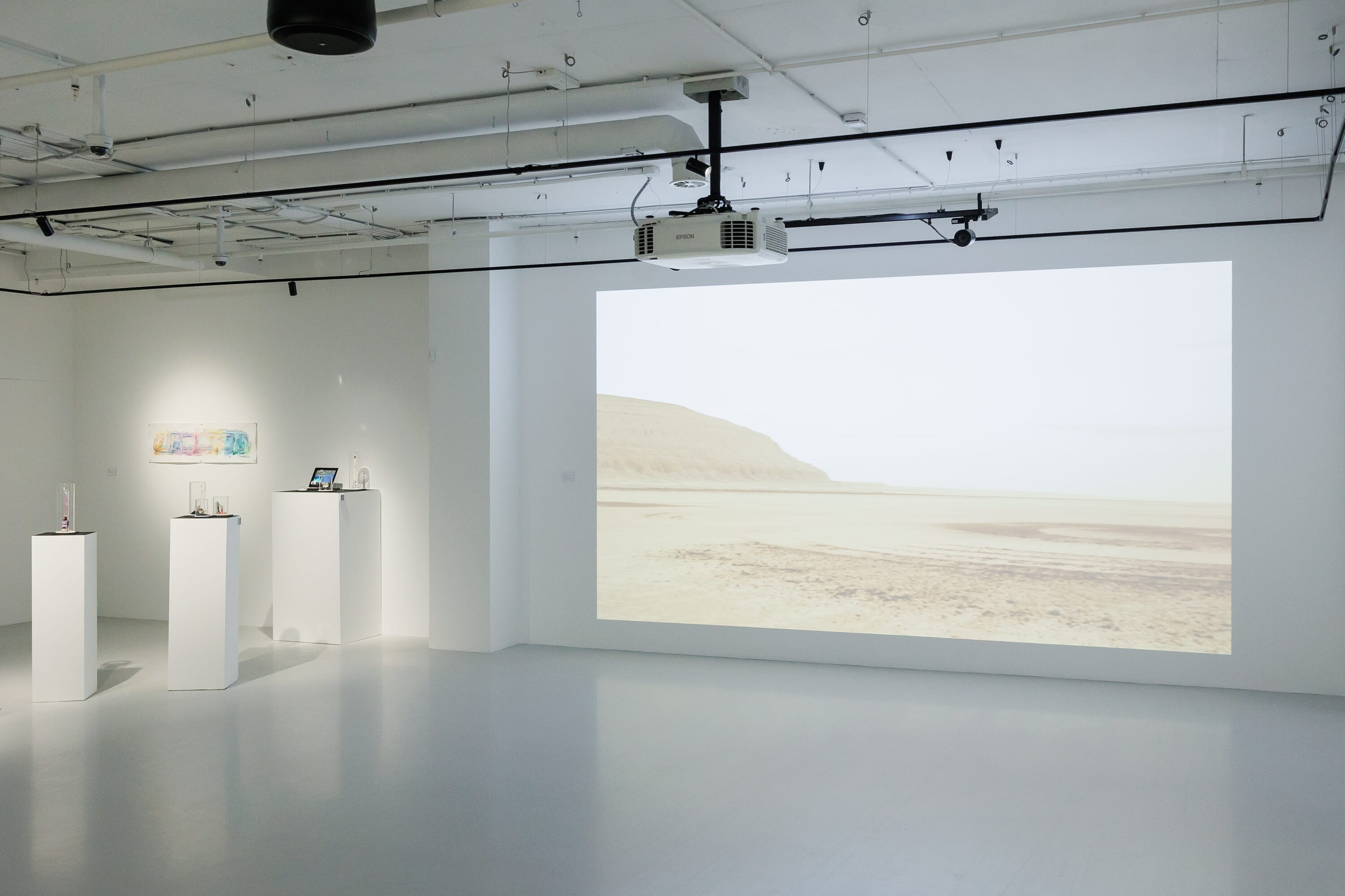
The exhibition is complemented by two videos. The first simulates a world where the body becomes a carrier of coordinates for space travel, transmitting ‘addresses’ through a system of gestures – so-called ‘choreocodes’. Sound created by the musician Phuturemusic (Ilya Solovyov) enhances the sense of pre-linguistic communication. The second video is a reconstruction of the memory of a journey through sector KS-250388. The landscapes of seven planets overlap and fade, as in a dream or digital simulation. This work was created with the participation of artist Nata Laperdina. The landscapes of the seven planets in the ‘sector’ under investigation are also presented in a series of graphic sheets.
One of the key goals of the project is to simulate a positive scenario for the future. On the one hand, starting with oneself, through the transformation of one’s ‘personal cosmos’, and on the other, through practices of obtaining the ‘miraculous’ from the ordinary: the miraculous items are assembled from found objects that the artist painstakingly selected for her ‘personal treasury’. If, as Michio Kaku suggests in ‘Physics of the Impossible’, some fantastic technologies will one day become reality, then art can be seen as a form of preliminary testing – a laboratory of the possible. Kalyanova’s project is an exercise in trusting the imagination. After all, it is humanity’s first and foremost tool, thanks to which the impossible will one day be given coordinates.
_______________________
Alyona Kalyanova (b. 1988, Moscow) is an interdisciplinary artist. In 2011 she graduated from the Stroganov Moscow State Academy of Art and Design. In 2012 she was awarded a scholarship by the Union of Artists of Russia. She has completed numerous internships in the USA, France and the Czech Republic. The main theme of her work is the cosmos and the human connection to it. She works with mixed-media sculpture, graphics, video and performance. Her solo and group exhibitions have been held in Russia, Austria, the USA and Montenegro. The artist is participating in the international LifeShip project, an initiative founded by space engineer Ben Haldeman to create long-lasting archives of the life, culture and knowledge of the Earth in the cosmos. Kalyanova’s drawings will be sent to the Moon, with a launch scheduled for the summer of 2026. Her works are held in private collections in Russia, the United States and Montenegro, including the Ruarts Foundation. One of her sculptures is installed at the Helikon Opera Theatre in Moscow.